
Azteca Awaits – But Can Mexico Overcome Security Fears for 2026 Glory?
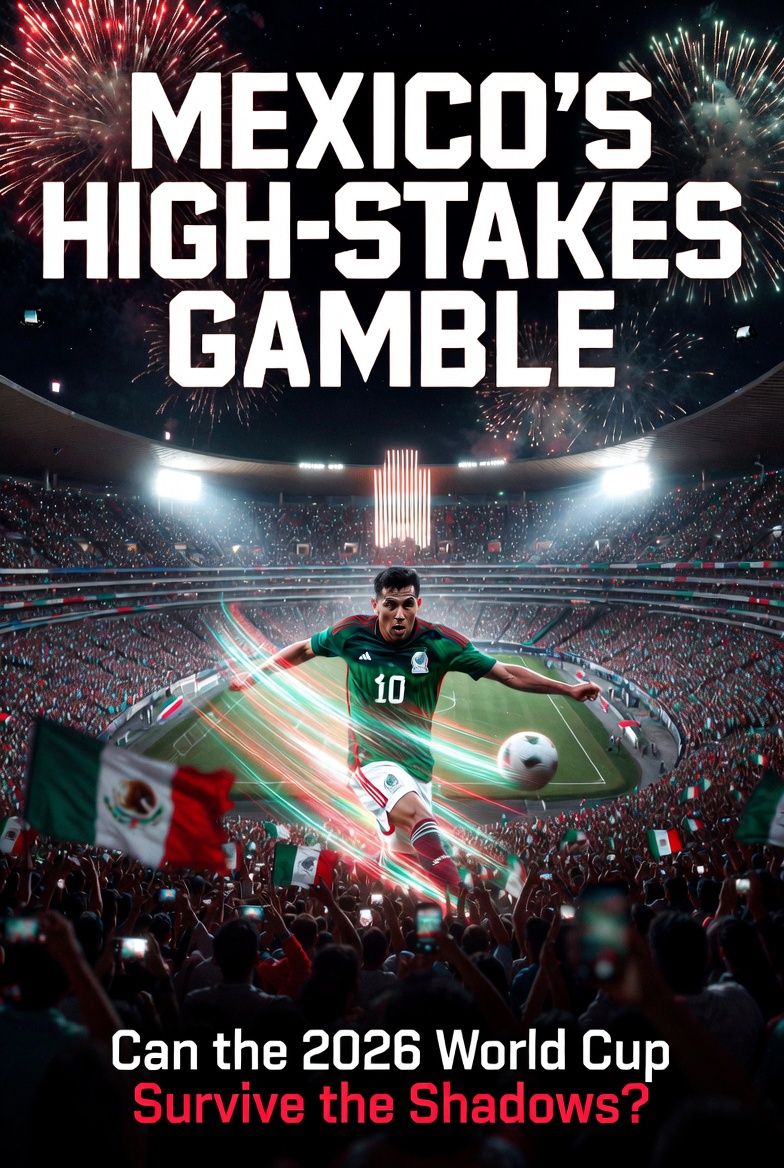
Imagine the deafening roar of 87,000 voices echoing through the night. The floodlights piercing the Mexico City sky like ancient Aztec warriors. The smell of street tacos mixing with the electric buzz of anticipation. On June 11, 2026, the eyes of the entire football world will turn to the legendary Estadio Azteca as host nation Mexico kicks off the biggest FIFA World Cup in history — a monumental 48-team, 104-match extravaganza spanning three countries.
This isn't just another tournament. For millions of die-hard fans who live and breathe the beautiful game, it's a once-in-a-lifetime pilgrimage. Mexico, co-hosting alongside Canada and the United States, is ready to deliver passion, drama, and unforgettable moments. But behind the fireworks and green jerseys lies a gripping story of resilience, tension, and a nation fighting to prove it can shine on the global stage despite very real challenges.
Mexico will host 13 matches across three iconic venues that pulse with football history and raw emotion. The crown jewel is Estadio Azteca (also referred to as Mexico City Stadium) in the bustling capital — a colossus that has already hosted World Cup finals in 1970 and 1986. This summer, it becomes the first stadium ever to open three different World Cups when Mexico faces South Africa in the tournament opener. The atmosphere promises to be volcanic.
Then there's Estadio Akron in Guadalajara, home to one of the most fervent fan bases in Latin America, where the air crackles with intensity. And Estadio BBVA in Monterrey, a sleek, modern fortress representing the cutting edge of Mexican football infrastructure. These aren't just stadiums — they're cathedrals where legends are born and hearts are broken.
For a country where football isn't just a sport but a way of life, this World Cup represents so much more than 90 minutes on the pitch. It's an economic lifeline expected to draw up to 5.5 million attendees across North America, injecting billions into tourism, hospitality, local businesses, and infrastructure. Fans from every corner of the globe will flood the streets, waving flags, singing anthems, and creating that magical World Cup vibe that only true believers understand.
Yet, as the countdown ticks relentlessly toward kickoff, a darker shadow looms.
In late February 2026, Mexican special forces carried out a high-risk operation that ended the reign of Nemesio “El Mencho” Oseguera Cervantes, the notorious leader of the powerful Jalisco New Generation Cartel (CJNG). What should have been a decisive blow against organized crime unleashed a storm of retaliatory violence. In Jalisco state — heartland of one of the host cities — cartel members responded with fury: burning vehicles, blocking major highways, clashing with security forces, and creating chaos particularly around Guadalajara and popular tourist zones like Puerto Vallarta.
Local league matches were postponed. International travel advisories flashed red. Social media filled with worrying footage, and football fans worldwide began asking the uncomfortable question: Can Mexico safely host the World Cup?
The unrest hit especially hard because Guadalajara is no ordinary venue. With four group-stage matches scheduled there — including a high-stakes clash between Mexico and South Korea on June 18 — any disruption sends ripples of concern through the entire tournament. For days, the world held its breath as smoke rose over parts of the city and questions mounted about whether FIFA would consider relocating games.
FIFA President Gianni Infantino and Mexican officials quickly shut down speculation. “There is absolutely no intention on FIFA’s part to remove any venues from Mexico,” insisted Jalisco Governor Pablo Lemus. Infantino expressed full confidence in the hosts. But the incident served as a stark reminder that, in Mexico, football and real-world complexities are deeply intertwined.
Enter President Claudia Sheinbaum. In early March 2026, just weeks after the violence, her government unveiled an ambitious response: Plan Kukulkán — named after the mighty serpent deity of Mayan mythology, symbolizing power, protection, and transformation.
This isn’t a modest security detail. Plan Kukulkán is a massive, multi-layered operation deploying nearly 100,000 security personnel across the host cities and surrounding tourist areas. That includes approximately 20,000 military and National Guard troops, 55,000 police officers from federal, state, and local levels, plus private security contractors. Supporting them: over 2,500 vehicles, 24 aircraft, advanced anti-drone systems, explosive-detection dogs (around 200 bomb-sniffing canines), and sophisticated intelligence-sharing networks.
Joint task forces have been established in Mexico City, Guadalajara, and Monterrey, with close coordination involving the United States, Canada, and FIFA. Security perimeters will surround stadiums, airports, hotels, training grounds, and fan zones. Sheinbaum herself traveled to Jalisco to deliver the message personally: the situation has stabilized, and fan safety is the absolute top priority.
For football fans planning their dream trip — booking flights, securing tickets, dreaming of singing the Mexican national anthem in the Azteca — these measures offer reassurance. Yet they also highlight the high stakes. Mexico is not hiding its challenges; it is confronting them head-on with overwhelming force and determination.
Of course, security isn’t the only hurdle on this rocky road to glory.
Estadio Azteca, the beating heart of Mexican football, has been undergoing extensive renovations since mid-2024. New seats, upgraded lighting, modern locker rooms, improved Wi-Fi, massive video screens, and a hybrid pitch are all part of the facelift. But the project has faced significant delays due to structural issues, logistical challenges, and the sheer scale of modernizing a 60-year-old icon without losing its soul.
As of early 2026, cranes still loomed over the stadium, seats were being installed in frantic shifts, and concerns grew that not every upgrade would be 100% complete by June. Stadium officials insist the venue will meet all FIFA requirements for the opening match and beyond, even if some finishing touches spill into the tournament period. For fans who have worshipped at the Azteca for decades, the idea of any imperfection feels almost sacrilegious — yet the venue’s legendary aura may well compensate.
Meanwhile, Guadalajara continues to wrestle with a persistent water crisis affecting neighborhoods, while Mexico City locals have voiced frustrations over traffic disruptions, construction noise, and questions about whether World Cup investments are truly benefiting everyday residents. Protests have popped up around stadium infrastructure projects, with critics arguing that resources should also tackle pressing urban issues like public transport and housing.
These internal tensions add layers to the narrative. Football fans aren’t just spectators — many are deeply connected to the communities hosting the event. They want the party, the goals, the drama… but they also hope the tournament leaves a positive, lasting legacy rather than fleeting headlines.
Despite the obstacles, optimism is surging among Mexican supporters and football lovers worldwide.
Mexico has hosted the World Cup twice before — in 1970 (the unforgettable Pelé era) and 1986 (Maradona’s magic). Both times, the nation delivered spectacles that still live in collective memory. The 2026 edition offers a chance to create new legends. Imagine Mexico advancing from Group A (facing South Africa, South Korea, and Czechia), the roar inside the Azteca reaching earthquake levels, and El Tri inspiring a new generation of young Mexican talents.
Beyond the pitch, the cultural impact could be enormous. Visitors will experience Mexico’s vibrant street life, incredible food, rich indigenous heritage, and that unmatched hospitality that makes first-time visitors feel like family. From mariachi bands greeting fans at airports to impromptu street parties after matches, the human element promises to be as memorable as any goal.
FIFA has poured resources into technology upgrades — better connectivity, fan experiences, and seamless transportation between venues. Legacy projects include improved stadium infrastructure that will serve Mexican clubs and communities long after the final whistle in New York/New Jersey.
For the passionate online football community — the ones who debate lineups at 3 a.m., create highlight reels, and live for underdog stories — this World Cup carries special weight. It’s a test of whether passion can triumph over adversity. Can the beautiful game bring people together even when real-world shadows linger? Can Mexico write a redemption arc worthy of its footballing soul?
As June 11 approaches, the tension is palpable, but so is the excitement. President Sheinbaum and her team continue to reassure the world while working tirelessly behind the scenes. FIFA monitoring teams have conducted multiple on-site reviews. International intelligence sharing is at an all-time high.
The message from Mexico is clear: we know the challenges, we respect the concerns, and we are ready to deliver a tournament that honors the sport’s spirit while showcasing our unbreakable resilience.
When that first whistle blows at the Estadio Azteca, millions will forget the headlines and lose themselves in the pure joy of football. The crowd will chant, the flags will wave, and for 90 minutes (or more in extra time), the world will remember why we love this game so fiercely.
Mexico stands at a crossroads — between its storied past and a high-pressure future. With nearly 100,000 guardians watching over the festivities, with three legendary stadiums polished and ready, and with the indomitable spirit of El Tri and its fans, the stage is set for something extraordinary.
This isn’t just a World Cup. It’s Mexico’s moment to prove that even in the face of formidable challenges, football — and the Mexican people — can rise, unite, and create magic that echoes across generations.
The beautiful game is coming home to one of its greatest lovers. And when the final chapter is written in July 2026, fans everywhere hope the story will be one of triumph, unity, and unforgettable glory under the Mexican sun.
Are you ready for the greatest show on earth? The Azteca awaits. ¡Vamos México!