Brazil’s Snake Island: The Most Terrifying Place on Earth?
Brazil’s Snake Island: The Most Terrifying Place on Earth?
What makes Ilha da Queimada Grande—better known as Snake Island—one of the most feared places on the planet?
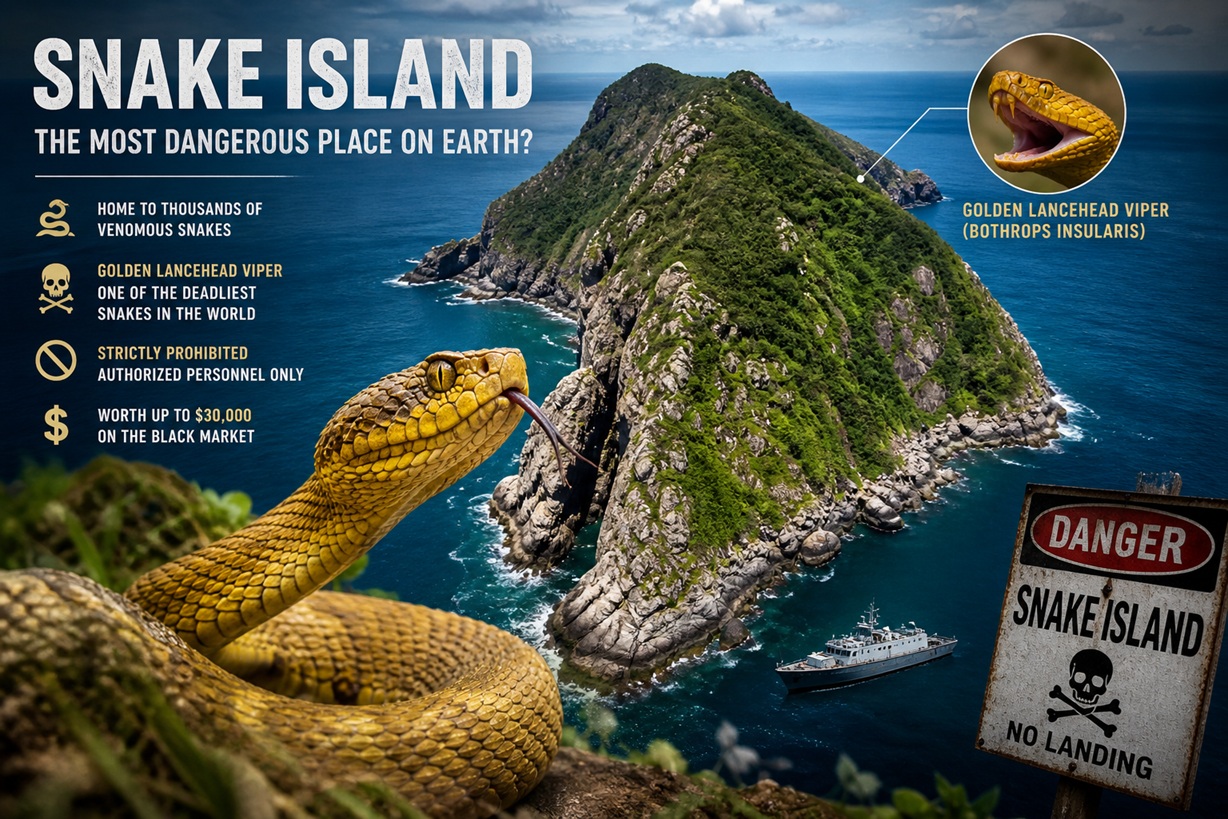
The world is filled with breathtaking destinations, but some places are so dangerous that humans are strictly forbidden from visiting them. Snake Island, located about 22 miles (35 km) off the coast of São Paulo in the South Atlantic Ocean, is one of those places.
Though visually stunning, this 110-acre island is widely considered one of the deadliest locations on Earth due to its overwhelming population of venomous snakes.
A Beautiful Island with a Deadly Reputation
Originally called “Burn Island” because fishermen once attempted to clear its forests by setting fires, the island eventually became infamous for something far more terrifying: snakes.
Today, Snake Island is the only known home of the critically endangered golden lancehead viper (Bothrops insularis), one of the most venomous snakes in the world.
Researchers estimate that in some areas, there may be as many as one to five snakes per square meter.
The Golden Lancehead: A Predator Unlike Any Other
The golden lancehead evolved in isolation after rising sea levels cut the island off from mainland Brazil around 11,000 years ago.
Because mammals are scarce on the island, these snakes primarily prey on migratory birds. As a result, their venom evolved to act extremely quickly—powerful enough to immobilize prey almost instantly.
Their venom is estimated to be several times stronger than that of their mainland relatives and can cause:
Severe swelling and pain
Vomiting
Internal bleeding
Kidney failure
Brain hemorrhaging
Tissue necrosis (destruction of flesh)
Without rapid treatment, a bite can be fatal.
A Dangerous Ecosystem
In addition to golden lanceheads, the island is home to thousands of other snakes, many of them also venomous.
The island’s extreme isolation has also led to genetic challenges such as inbreeding, making the species both unique and vulnerable.
Because of its ecological importance and danger, the Brazilian government has banned public access to the island. Only authorized researchers and the Brazilian Navy may visit under strict safety protocols.
Legends and Horror Stories
Snake Island has inspired chilling local legends.
One popular story tells of a fisherman who unknowingly landed on the island, was bitten, and was later found dead in his drifting boat.
Another tale describes a lighthouse keeper and his family who were allegedly attacked by snakes that entered through the windows, forcing them to flee—only to perish before escaping.
While some of these stories may be exaggerated, they contribute to the island’s terrifying mystique.
Black Market Threats
Despite government restrictions, illegal poachers sometimes risk visiting Snake Island because golden lanceheads are highly valuable on the black market, reportedly fetching up to $30,000 each.
Modern Exploration
In 2019, Australian journalist Tara Brown visited the island as part of a television documentary after months of securing permission.
She described seeing multiple deadly snakes every few steps, calling the experience both fascinating and deeply unsettling.
Final Thoughts
Snake Island is a rare example of nature’s beauty combined with extreme danger. Its dense snake population, lethal venom, and restricted access have made it one of the most feared places on Earth.
While it may sound like something out of a horror movie, Snake Island is also a vital scientific treasure—offering researchers valuable insight into evolution, biodiversity, and venom research.
For most people, however, it remains a place best admired from a safe distance.