Nanotechnology and Its Real-World Applications
Nanotechnology and Its Real-World Applications
Nanotechnology has become a widely recognized term in modern science and technology, but many people still wonder what it actually means.
What Is Nanotechnology?
Nanotechnology is the science and engineering of designing, analyzing, manufacturing, and applying materials, devices, and systems by controlling matter at the nanometer scale (one nanometer = one billionth of a meter, or 10⁻⁹ meters).
Because nanotechnology works at the molecular and atomic level, it allows scientists to create materials with unique physical, chemical, and biological properties. This field is often considered cleaner, more efficient, and more sustainable than many traditional technologies.
Nanotechnology is already transforming industries today and holds enormous promise for the future. Imagine microscopic machines capable of entering the human body, identifying damaged cells, and repairing them from within. While this may sound like science fiction, many such applications are actively being researched.
Major Applications of Nanotechnology
1. Nanotechnology in Medicine: Saving Lives
One of the most exciting uses of nanotechnology is in healthcare.
Researchers are developing nanoparticle-based treatments that can target diseases such as cancer with remarkable precision. For example, gold nanoparticles can be delivered directly to tumors, where they are heated using infrared lasers to destroy cancer cells while minimizing damage to surrounding healthy tissue.
Scientists are also exploring nanorobots—microscopic machines that may one day travel through the bloodstream to deliver medications directly to affected organs or tissues. This targeted approach could significantly improve treatment effectiveness while reducing side effects.
In the future, nanotechnology may revolutionize cancer care, potentially allowing doctors to treat even highly complex conditions like brain cancer without invasive surgery or harmful chemotherapy.
2. Nanotechnology in Electronics and Energy
Nanotechnology is already influencing many of the electronic devices people use every day.
Modern processors increasingly rely on nanoscale components, making them smaller, faster, and more energy-efficient. Some consumer products, including keyboards, smartphones, and medical devices, also use antimicrobial nano-coatings.
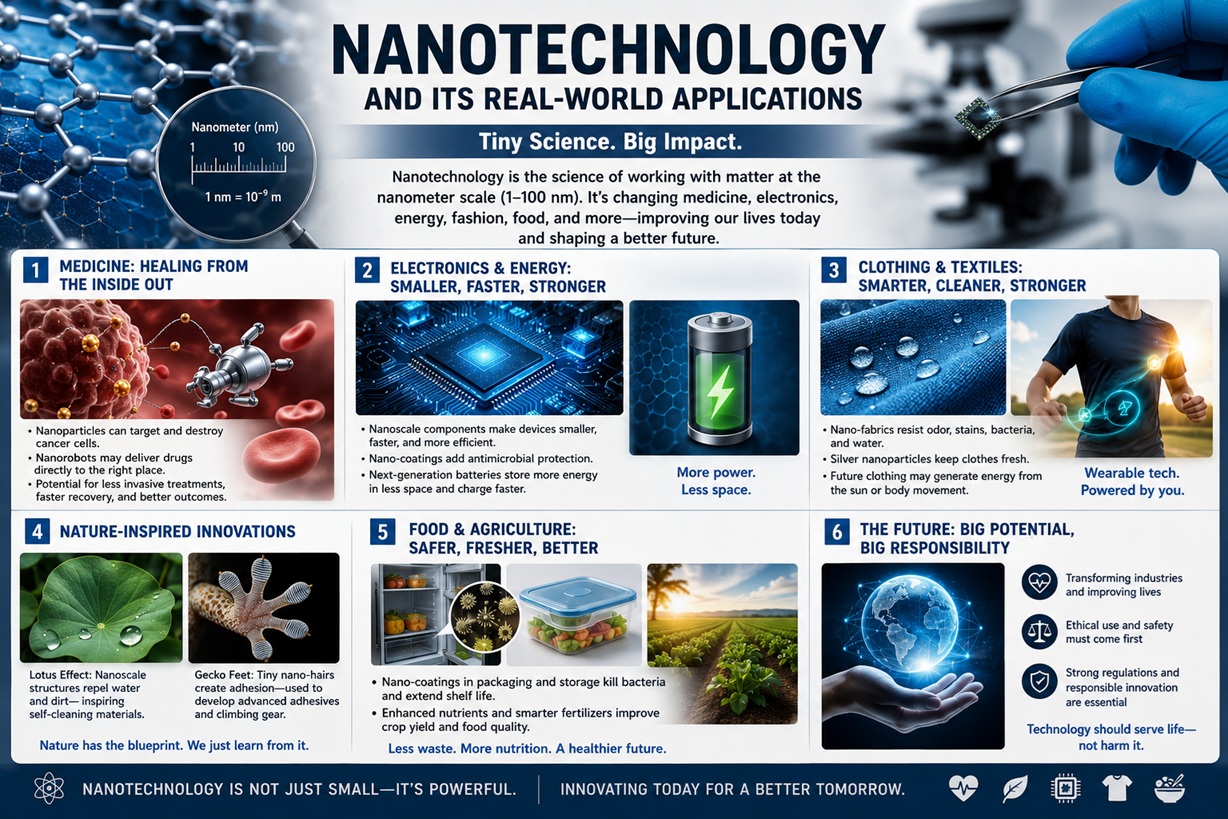
In energy storage, nanotechnology could dramatically improve battery performance. Advanced nanomaterials may enable batteries with larger surface areas, allowing them to store more power while becoming smaller and lighter.
This could lead to:
Longer-lasting smartphones
Faster-charging electric vehicles
More efficient renewable energy systems
3. Nanotechnology in Clothing and Textiles
The fashion and textile industry has also embraced nanotechnology.
Nano-enhanced fabrics can now offer:
Odor resistance
Antibacterial protection
Water resistance
Stain resistance
Silver nanoparticles, for example, are used in sportswear to eliminate odor-causing bacteria.
Future smart clothing may even generate electricity from solar energy or body movement, allowing wearable devices to charge phones or health trackers on the go.
4. Nature-Inspired Nanotechnology
Many nanotechnology innovations are inspired by natural systems.
For example:
Lotus leaves repel water due to nanoscale surface structures, inspiring self-cleaning and waterproof materials.
Gecko feet use nanoscale hairs to adhere to surfaces, leading scientists to develop advanced climbing materials and adhesives.
By studying nature, researchers continue to create highly efficient technologies based on designs that already exist in the biological world.
5. Nanotechnology in Food and Agriculture
Nanotechnology is also changing how food is produced, preserved, and consumed.
Applications include:
Packaging that kills bacteria and extends shelf life
Enhanced food storage containers
Nutrient delivery systems for healthier foods
Improved agricultural fertilizers and pesticides
For example, nano-silver coatings are already used in some refrigerators and food containers to reduce bacterial growth.
These innovations may help reduce food waste while improving food quality and safety.
Ethical and Safety Considerations
Despite its enormous potential, nanotechnology also raises important concerns.
Potential issues include:
Human health risks
Environmental effects
Ethical concerns about genetic engineering
Social and economic inequality
Governments and scientists around the world are working to establish regulations that ensure nanotechnology develops responsibly.
As former UK Science Minister Lord Sainsbury noted, nanotechnology offers tremendous benefits, but society must carefully consider its ethical, safety, and social implications.
The Future of Nanotechnology
Nanotechnology is expected to play a major role in shaping the future of:
Medicine
Energy
Electronics
Environmental protection
Manufacturing
Food systems
As research continues, nanotechnology may become one of the defining scientific revolutions of the 21st century.
From curing diseases to creating smarter materials, its potential is vast—but responsible development will be essential to ensure it benefits humanity as a whole.