
Truffles—often called the “diamonds of the kitchen”—may look rough, lumpy, and unappealing, but they are among the world’s most luxurious and expensive culinary ingredients.
Truffles—often called the “diamonds of the kitchen”—may look rough, lumpy, and unappealing, but they are among the world’s most luxurious and expensive culinary ingredients.
Why Are Truffles So Expensive?
Truffles are incredibly rare because they grow underground near the roots of specific trees, such as oak and hazelnut, and only thrive in highly specialized soil and climate conditions. Unlike ordinary mushrooms, they cannot be easily farmed on a large scale and remain heavily dependent on nature.
Harvesting truffles is also difficult and labor-intensive. Specially trained dogs are used to sniff out their powerful aroma beneath the soil. While pigs were once commonly used for truffle hunting, many countries like Italy have banned the practice because pigs often eat the truffles and damage delicate ecosystems.
A Rich and Mysterious History
Truffles have been prized for thousands of years. Ancient Egyptians reportedly enjoyed them wrapped in goose fat, while Greeks and Romans believed they possessed medicinal properties.
During the Middle Ages, however, truffles largely disappeared from European cuisine because their mysterious aroma led some to associate them with witchcraft. It wasn’t until the 17th century, under King Louis XIV of France, that truffles regained prominence as a luxury food reserved for aristocrats.
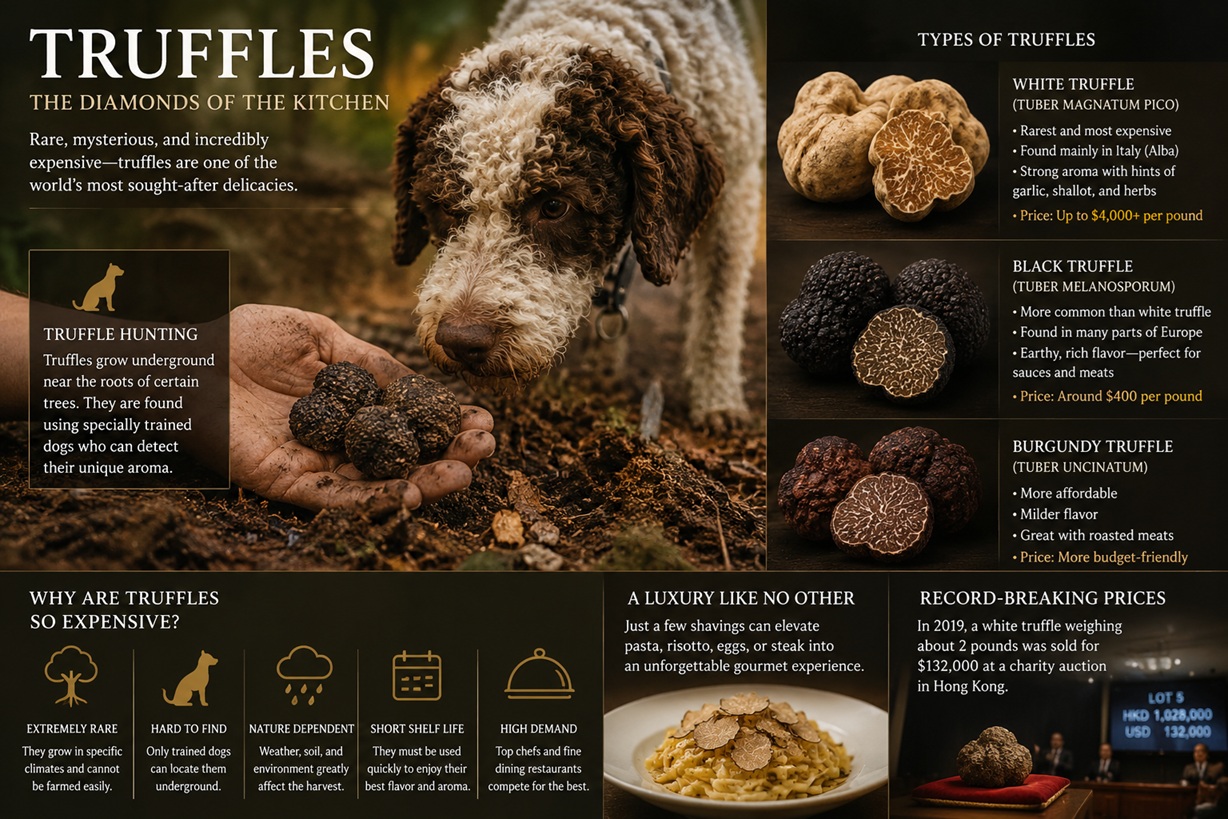
Main Types of Truffles
White Truffles
The rarest and most expensive variety
Primarily found in Italy, especially the Alba region
Strong, pungent aroma with notes of garlic, shallots, and herbs
Prices can exceed $4,000 per pound
Black Truffles
More common but still highly prized
Found throughout parts of Europe
Earthy, rich flavor often used in sauces and meat dishes
Typically around $400 per pound
Burgundy Truffles
More affordable
Milder flavor
Commonly paired with roasted meats
Why the Wealthy Love Them
Just a few thin shavings of truffle can transform dishes like pasta, risotto, eggs, or steak into extraordinary gourmet experiences. Their aroma is so distinctive that it is nearly impossible to replicate with any other ingredient.
For Michelin-starred restaurants and luxury chefs, truffles are not just food—they are a status symbol.
Record-Breaking Prices
In 2019, a Hong Kong businessman famously paid $132,000 for a white truffle weighing approximately two pounds at a charity auction.
Final Thoughts
Truffles command extraordinary prices because of:
Extreme rarity
Difficult harvesting methods
Short shelf life
High demand in luxury dining
Historical and cultural prestige
In essence, truffles are where nature, culinary artistry, and exclusivity meet—making them one of the most coveted delicacies in the world.